
Hollywood’s golden boy still feels the sting of a missed opportunity. In a candid conversation this week, George Clooney revealed that early in his career he nearly landed one of cinema’s most iconic supporting roles.
He made it to the final audition for the part of J.D. in the legendary film Thelma & Louise. That role eventually went to Brad Pitt. The relief for Pitt came fast; and the blow for Clooney lingered.

Clooney admitted that when he heard Brad got the role he was shocked, angry, and downright disappointed. The part felt like a ticket out of television and into serious film ambition. At the time Clooney was doing bit parts on TV, hoping for a breakout. The audition for Thelma & Louise promised that breakout. When the casting call ended with Pitt’s name, Clooney says he avoided the movie. He couldn’t bring himself to watch it, because it reminded him what could have been.
The film’s release in 1991 instantly made Pitt into a rising star. The swagger, the looks, the scenes; they all catapulted him from unknown to visible. Meanwhile Clooney kept chasing. He landed a role on the hit TV show ER in 1994 and gradually worked his way toward big‑screen credibility. That path eventually led him to fame, fortune and critical acclaim. But the memory of the lost role never quite left him.
In recent days he admitted the wound healed only slowly. He said that when he finally watched Thelma & Louise years later he recognized that Pitt nailed the part. The energy, the charisma, the screen presence; it made sense.
Clooney conceded that deep down he understood why Pitt was chosen. He laughed now when Pitt teases him about “stealing” the part. That kind of tough love between friends feels surreal given how badly the loss hit him at first.

Despite the misstep, Clooney’s career arc didn’t just recover, it soared. Over the years he built a resume heavy with leading roles, blockbuster hits and awards. He proved repeatedly that one missed role does not define a career. He also showed that resilience and reinvention can outweigh early disappointments. His success became a testament to grit more than to luck.
Still, the story continues to spark debate inside Hollywood circles. Some critics ask: if Clooney had gotten that early boost, how different would his career have been. Would he have taken different roles? Would he be the same A‑list actor we know today? Others argue that fate has a way of balancing paths; maybe missing Thelma & Louise forced Clooney to forge a stronger, longer‑lasting route to stardom.
For fans watching now, the revelation stirred nostalgia and new speculation. Social media erupted with hypotheticals: what if Clooney had played J.D. Would Thelma & Louise have had the same cultural impact? Would Pitt have become a megastar so fast? Would Hollywood history (and Clooney’s story) look different?
What makes the moment even more interesting is how open Clooney is about regret. He is not hiding bitterness. He is not sugarcoating envy. He admitted he avoided watching the film, that seeing it hurt, that for years he carried a quiet ache. That kind of honesty from a Hollywood legend invites empathy from people who rarely see glitz admit vulnerability.

But he also refused to wallow. Instead he used the memory as fuel. He committed himself to better roles, more control over his career choices, and sharpening his craft. The loss pushed him to become more selective, more intentional, and ultimately more legendary. He turned rejection into drive, heartbreak into hustle.
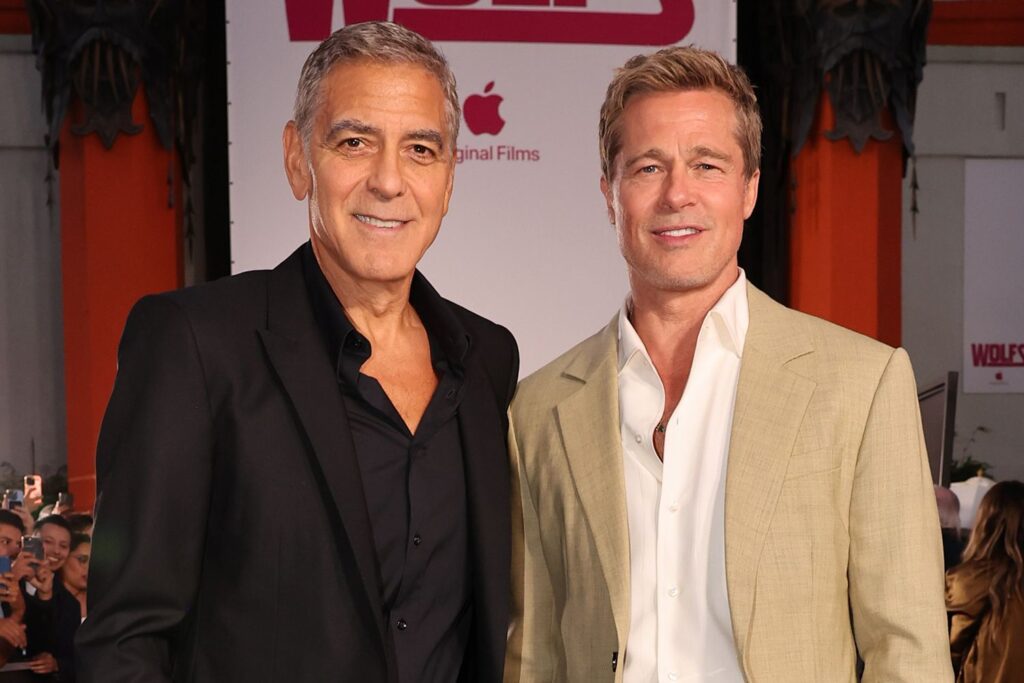
In recent interviews his tone mixes reflection with humor. Pitt reportedly still jokes about getting the part first. Clooney laughs along. Through films like their hit franchise together and their recent work on Wolfs, the two men built a friendship that seems genuine, maybe strengthened by that early rivalry.
Clooney admitted that when they meet, Pitt tosses friendly jabs. Clooney doesn’t hold back anymore. He has made peace with what he lost and embraced what he built.
This story challenges the myth of the “overnight success.” It shows how even big stars sometimes start with crushing disappointments. It shows how rejection can linger, but also how it can shape a career quietly over decades. It raises a provocative question for any film‑lover or aspiring actor: does one lost role matter less than the choices you make after it?
In the end Clooney’s revelation reminds us that fame and fortune are rarely linear. They are messy, unpredictable, often painful.
Thelma & Louise could have been his. Instead it went to someone else. And he lost. But what he found afterward (persistence, resilience, transformation) may have mattered even more.