
Choosing the right jeans is not only about fit, waist, or color. The hem length can completely change how an outfit looks.
Too short hems can overexpose the ankle, while hems that are too long may bunch around the shoe, making even expensive jeans look awkward. The right length creates a clean and polished appearance that makes your style stand out.
Simple hem rules make dressing much easier whether you are wearing heels or flats.
The accompanying image provides a clear guide, showing what lengths look too high, too long, perfectly balanced, or just right, helping you achieve a stylish and intentional look every time.
Contents
Why Hem Length Matters?
Hem length matters because it is the part of your jeans that meets your shoes. It sits at the lowest point of your outfit and influences how your legs look, how your shoes are shown, and how polished your entire look feels.
The right hem makes your outfit look effortless, letting the jeans fall naturally and keeping the shoes visible.
When the hem is off, proportions can look awkward.
Too-short jeans may make your legs appear cut off, while too-long jeans can drag, wrinkle, or hide your shoes.
I’ve learned that the best hem length often depends on the shoes I plan to wear, so I usually consider my footwear first before choosing which jeans to put on.
Hem Length Rules for Heels
Heels already add height and shape to the leg, so the hem length should support that clean, elongated look. When I wear heels, I want my jeans to look polished without fighting against the shoe.
The goal is to let the jeans and heels work together, not compete.
The image shows four examples for heels: too high, perfect length, too long, and clean break. These are very helpful because heels can be tricky.
A small difference in hem length can change whether the outfit looks elegant or unfinished.
1. Too High: When Jeans are Cropped Too Much?
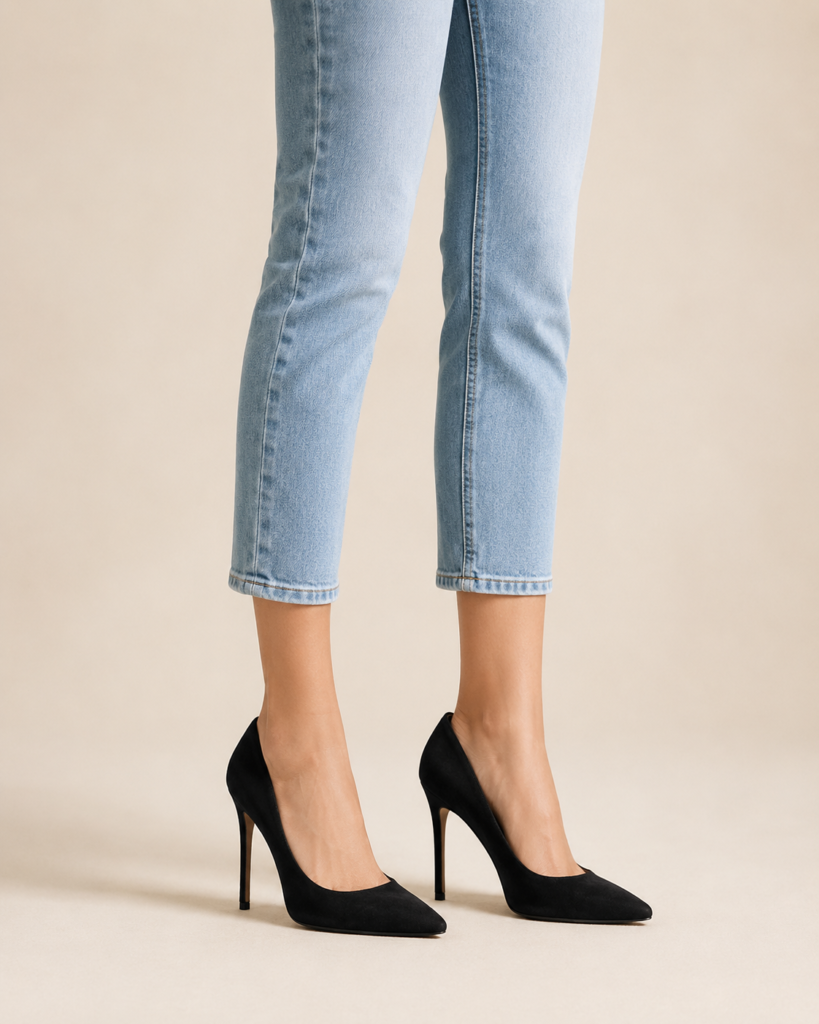
The first example shows jeans cropped too high above the ankle. This is marked as “too high,” and I agree with it. When jeans sit too far above the ankle while wearing heels, the space between the hem and the shoe can look too exposed.
I have tried this kind of length before, and it can be hard to style unless the jeans are intentionally cropped.
If the cut is not designed that way, it may look like the jeans shrank or were altered too short. Instead of making the leg look longer, it can create a visual break.
This does not mean cropped jeans are always wrong.
Cropped jeans can be stylish, especially with the right shape and outfit. But for a clean heel look, jeans that end too high above the ankle often feel less balanced.
Personal Tip: When I wear heels, I avoid jeans that stop too far above my ankle unless I am going for a very casual cropped style.
For a more elegant outfit, I prefer the hem to sit closer to the ankle bone or slightly above the shoe.
2. Perfect Length: Hem Hits Right at the Ankle Bone
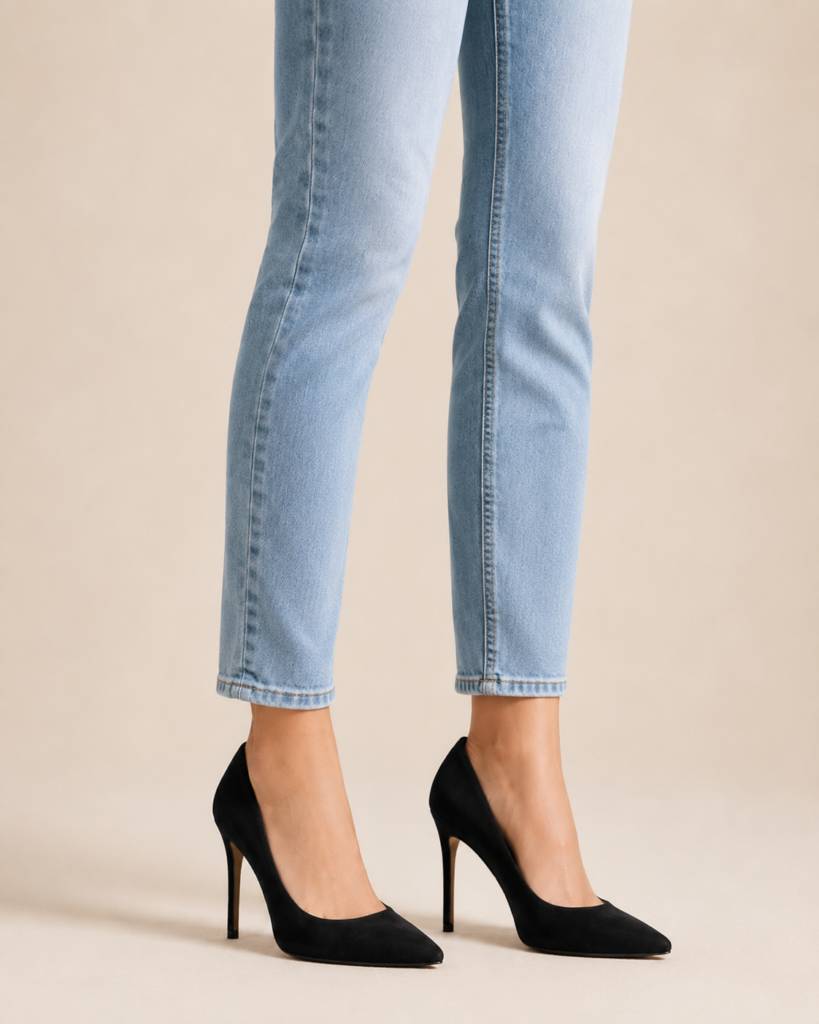
The second example shows the hem hitting right at the ankle bone. This is labeled as the perfect length, and it is one of the easiest and most flattering ways to wear jeans with heels.
This length works because it shows enough of the shoe while keeping the leg line clean. The ankle is lightly visible, but not overly exposed.
The jeans do not bunch up, and they do not hide the heels. Everything feels balanced.
I personally like this length for slim jeans, straight-leg jeans, and ankle jeans. It gives the outfit a neat finish without needing much styling effort. When I wear pointed heels or classic pumps, this hem length makes the shoes stand out in a simple and elegant way.
Personal Tip: I usually check the hem while standing straight in front of a mirror. If the jeans touch around my ankle bone and do not wrinkle at the bottom, they are usually a good match for heels.
3. Too Long: Hem Resting on the Shoe Heel
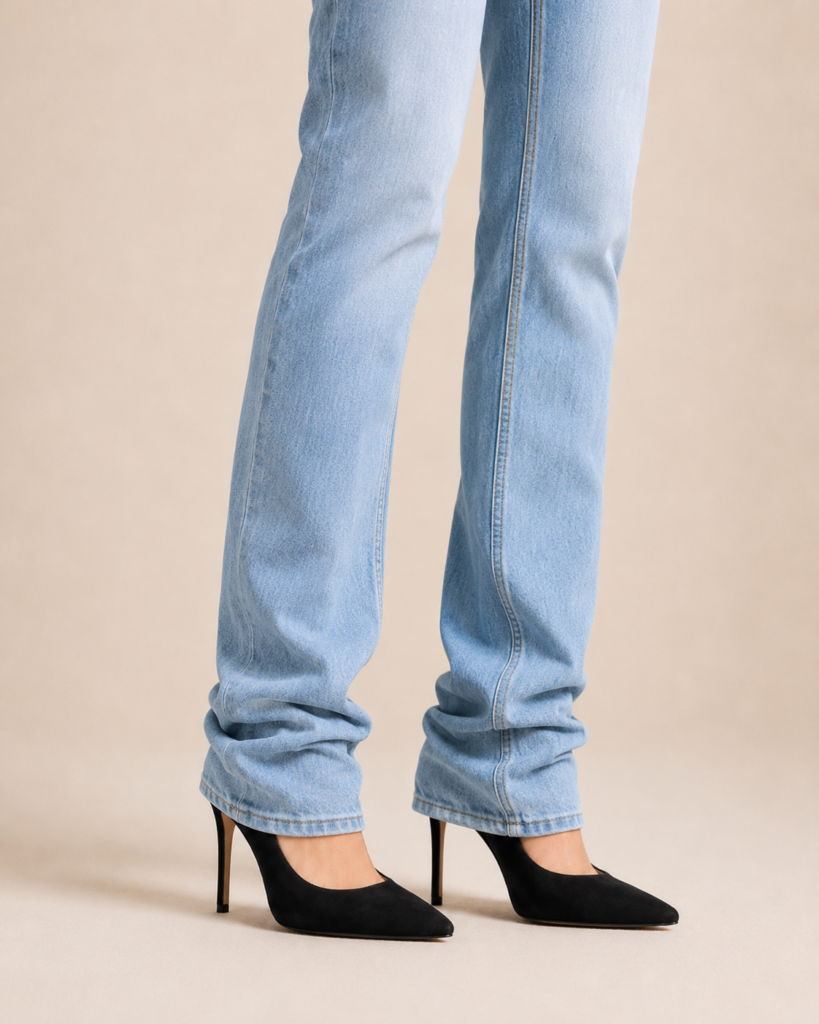
The third example shows jeans that are too long, with the hem resting heavily on the shoe heel. This is one of the most common mistakes I notice with jeans and heels.
When the hem is too long, the jeans start to fold, bunch, or collapse around the shoe. This can make the outfit look heavy at the bottom.
It can also hide the shape of the heels, which defeats the purpose of wearing a nice pair of shoes.
I have worn jeans that were slightly too long with heels before, and even when the rest of the outfit looked good, the bottom part always bothered me. It made the look feel less polished.
Long hems can also be uncomfortable because they may catch under the shoe or drag against the ground.
Personal Tip: If I love a pair of jeans but they are too long, I would rather get them hemmed than force them to work.
A simple alteration can make jeans look much more expensive and intentional.
4. Clean Break: Hem Slightly Above the Shoe Top
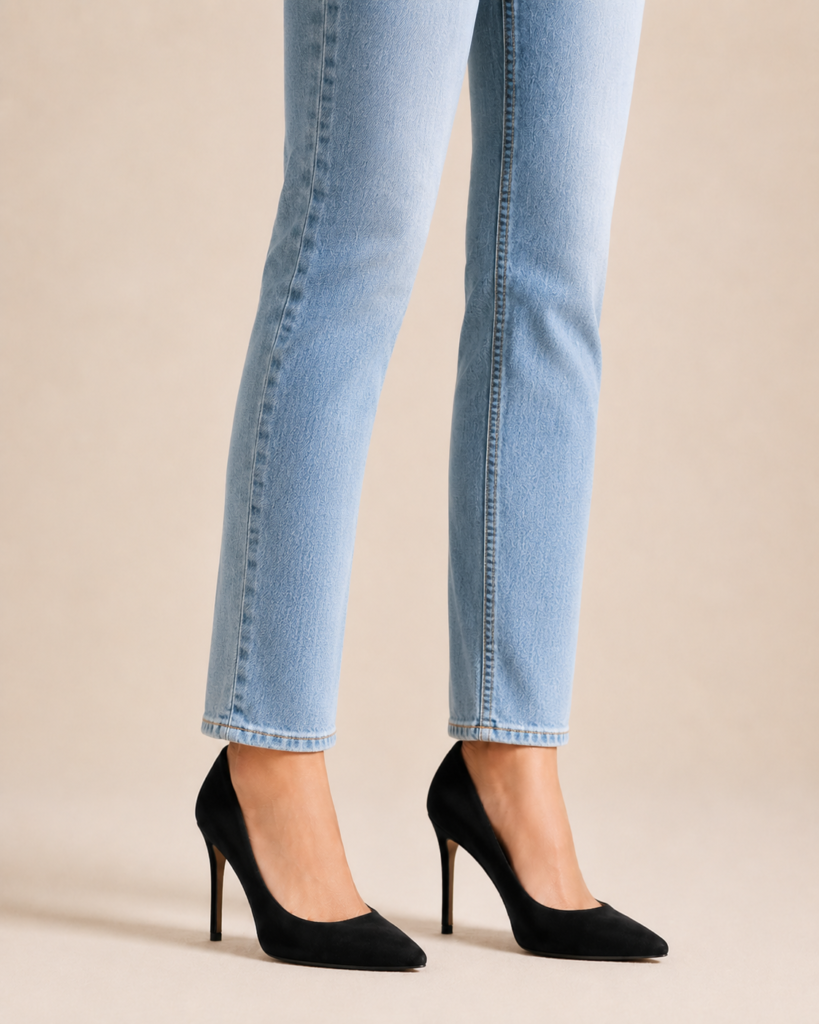
The fourth heel example shows a “clean break.” This means the hem sits slightly above the shoe top without too much bunching. I really like this option because it looks relaxed but still neat.
A clean break works well when I want my jeans to look modern and natural. It is not as cropped as the ankle-bone length, but it still avoids messy stacking.
The jeans lightly meet the shoe without overwhelming it.
This style can work especially well with straight-leg jeans or slightly longer denim. It gives a softer finish than a sharp cropped hem, but still keeps everything controlled. For me, this is a great everyday option when I want to wear heels without looking too dressed up.
Personal Tip: I like a clean break when wearing block heels, pointed pumps, or heeled boots. The key is making sure the fabric does not pile up too much around the shoe.
Hem Length Rules for Flats
Flats are comfortable, easy, and perfect for daily outfits, but they need a different hem approach. Since flats do not add much height, the wrong jean length can make the outfit look shorter or heavier.
When I wear flats, I want the jeans to touch the shoe in a clean way. I do not want too much ankle showing, but I also do not want the hem dragging on the floor.
The best length should feel relaxed, neat, and practical.
The image shows four examples for flats: too short, just right, dragging, and perfect cover. These rules are very useful because flats sit lower than heels, so jeans need to be chosen carefully.
1. Too Short: Hem Too Short and Ankle Overly Exposed
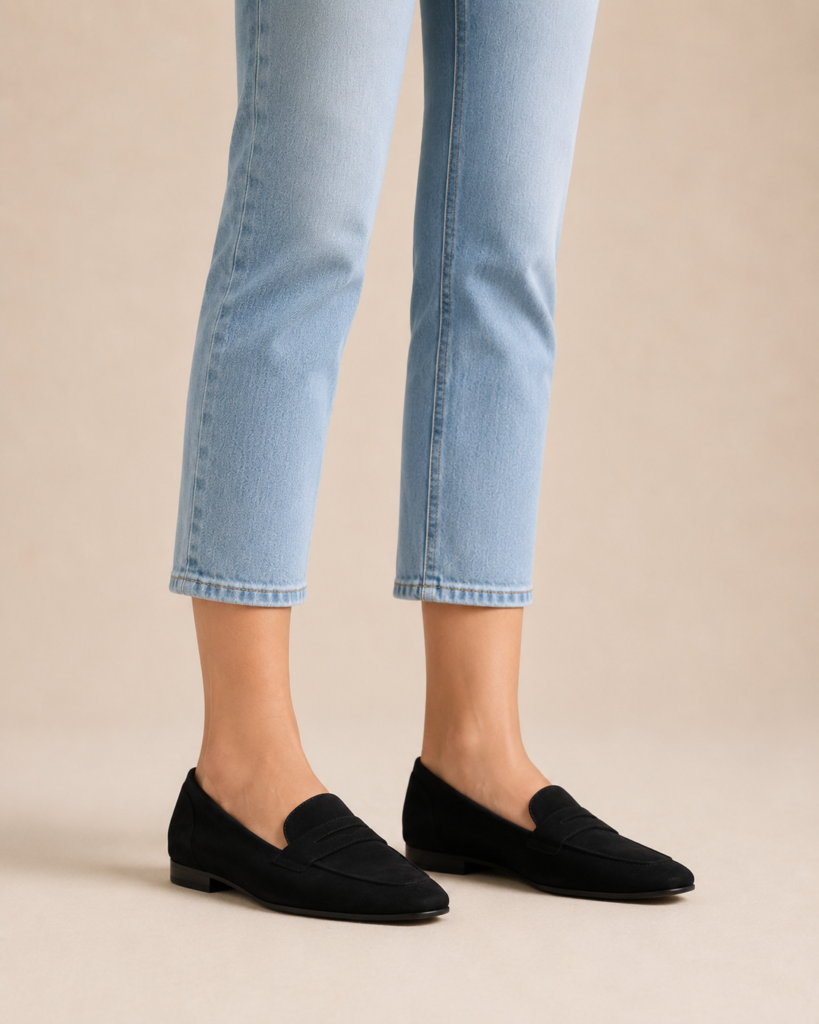
The first flats example shows jeans that are too short, with the ankle overly exposed. This can make the outfit look a little awkward, especially if the jeans are not meant to be cropped.
With flats, too much ankle exposure can visually shorten the leg line. It can also make the jeans look like they do not fit properly.
I have noticed that when jeans are too short with flats, the shoes can look disconnected from the rest of the outfit.
Again, this does not mean ankle-length jeans are bad. They can look beautiful when styled intentionally. But if the goal is a clean everyday look with flats, too-short hems can feel unfinished.
Personal Tip: When wearing flats, I usually avoid jeans that stop high above the shoe unless they are designed as cropped jeans.
A little ankle can be fine, but too much space can make the outfit lose balance.
2. Just Right: Hem Touching the Top of the Shoe
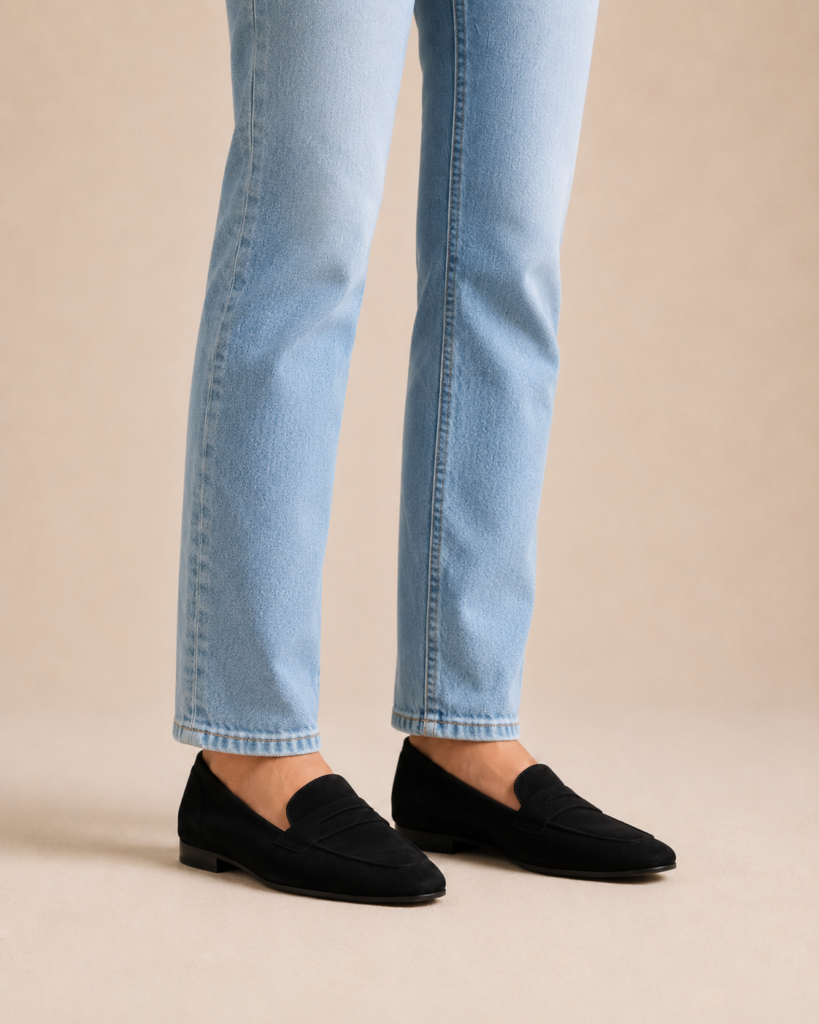
The second flats example is labeled “just right,” where the hem touches the top of the shoe. This is one of my favorite lengths for flats because it is simple, clean, and easy to wear.
When the hem just touches the shoe, the jeans look relaxed without looking messy. The shoe is still visible, but the leg line is not cut off too high.
This length works well for loafers, ballet flats, flat mules, and simple slip-on shoes.
I like this length because it feels effortless.
It is not too formal, but it still looks put together. For everyday outfits, this is the kind of hem length I would choose when I want comfort without sacrificing style.
Personal Tip: I always test jeans with the flats I actually plan to wear. A hem that looks perfect with sneakers may sit differently with loafers or ballet flats.
3. Dragging: Hem Touching the Floor
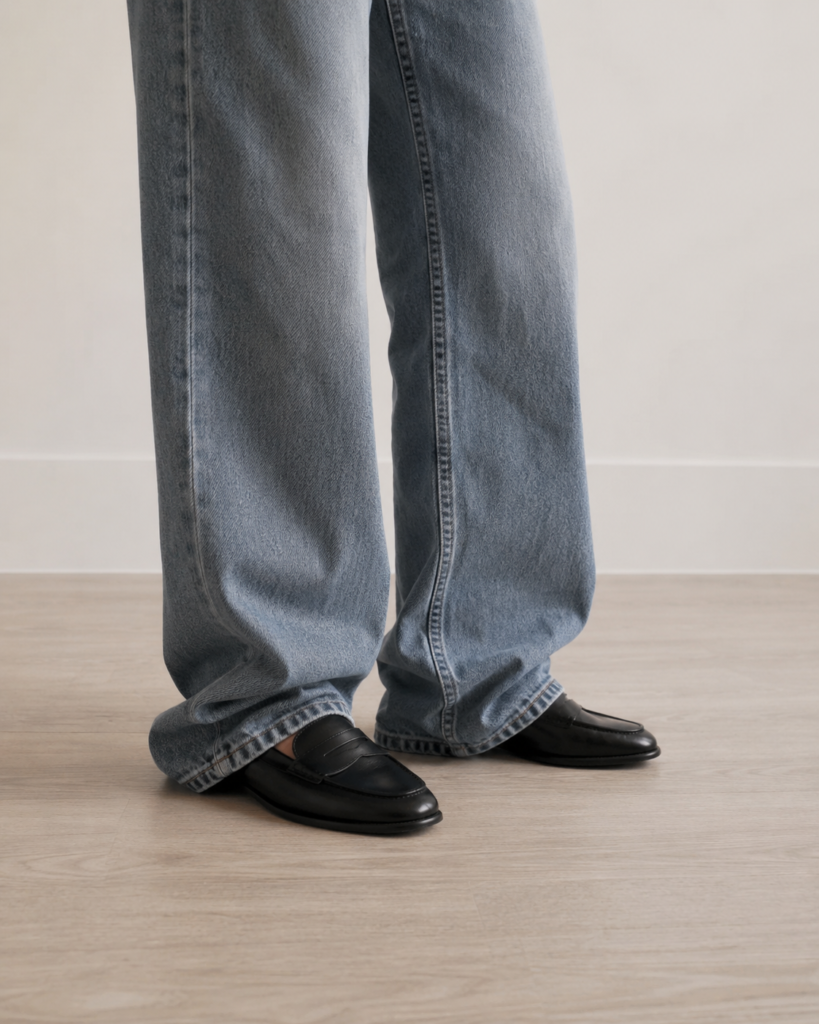
The third flats example shows jeans dragging on the floor. This is marked as wrong, and for good reason. Dragging hems can look untidy and can damage the jeans over time.
When jeans drag, they collect dirt, wrinkle badly, and lose their clean shape. They can also make walking uncomfortable.
With flats, this problem happens easily because the shoe does not lift the hem off the ground like heels do.
I personally avoid wearing long jeans with flats unless the jeans are designed to skim the shoe without touching the floor. Even then, I check the back of the hem because that is usually where dragging happens first.
Personal Tip: If jeans drag when I wear flats, I do not ignore it. I either switch to heels, cuff the hem neatly, or choose another pair that sits better with flat shoes.
4. Perfect Cover: Hem Lightly Covering the Shoe Without Stacking
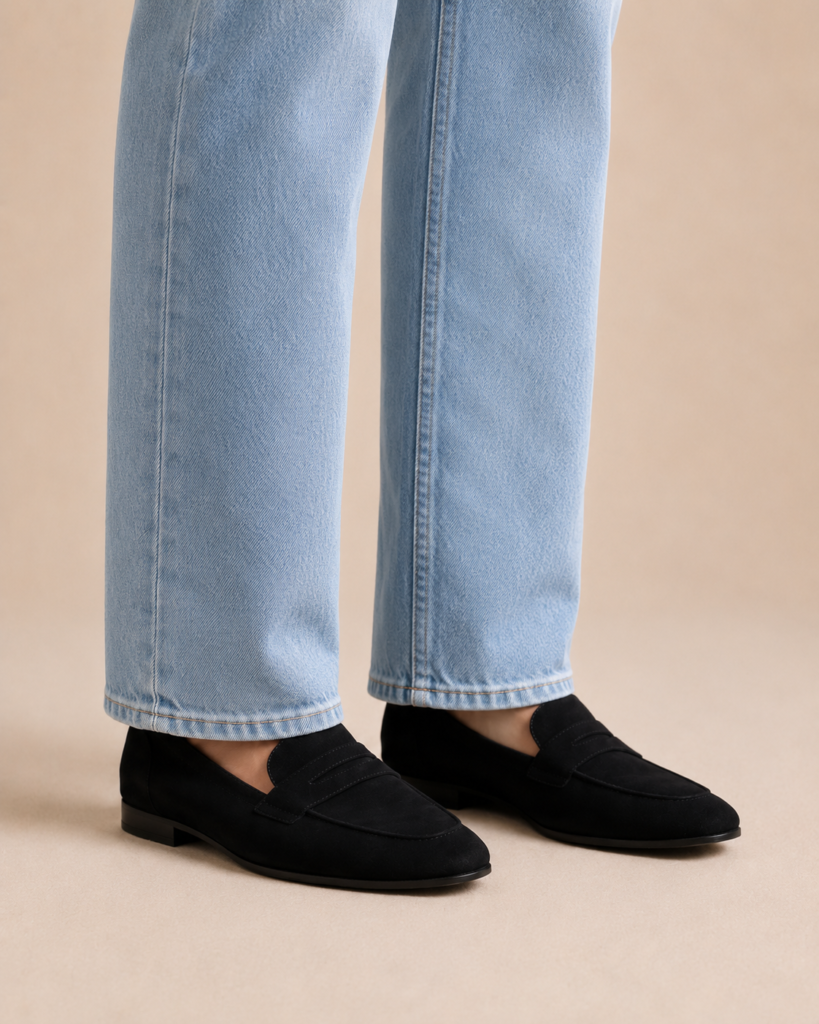
The final flats example shows the hem lightly covering the shoe without stacking. This is a polished option for people who like a slightly longer jean look.
This length works because the jeans cover part of the shoe but do not create heavy folds. The outfit still looks smooth and intentional.
It is especially nice with straight-leg jeans or relaxed jeans that are not too wide.
I like this look when I want a soft, casual style. It feels easy but not careless. The shoe is partly covered, but the jeans are not dragging or bunching. That balance is what makes it work.
Personal Tip: When wearing this length, I make sure the hem still moves naturally when I walk. If the fabric piles up or catches under the shoe, the jeans are too long.
How I Choose the Right Jeans for My Shoes?
The easiest rule I follow is this: I choose the jeans based on the shoes, not the other way around.
If I know I am wearing heels, I look for jeans that hit at the ankle bone or create a clean break. If I am wearing flats, I choose jeans that touch the top of the shoe or lightly cover it.
I also pay attention to the style of the jeans.
Skinny and slim jeans usually look best around the ankle. Straight-leg jeans can work with a clean break. Wider jeans may need more careful hemming because extra fabric can quickly look heavy.
One mistake I used to make was expecting one pair of jeans to work with every shoe. Sometimes that happens, but not always. Different shoes have different heights and shapes, so the hem changes depending on what I wear.
Simple Hem Length Tips I Actually Use
When I try on jeans, I always wear the shoes I plan to style them with. This makes a big difference. Looking at jeans barefoot does not always show the real length.
I also check the hem from the side and back, not just the front.
Sometimes the front looks fine, but the back is dragging. I walk a few steps too, because jeans can shift when moving.
If jeans are almost perfect but slightly too long, I consider hemming them. A good hem can make basic jeans look much more polished. If I do not want to alter them, I cuff them neatly, but only when the style looks intentional.