

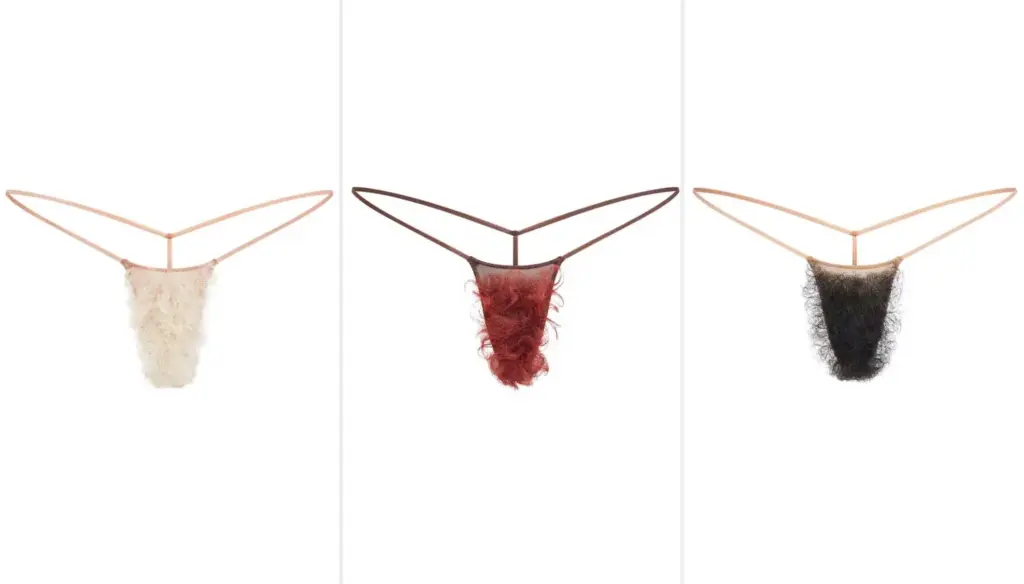
When Kim Kardashian unveiled her latest drop for her brand SKIMS, it wasn’t a new shapewear piece or cozy lounge set—it was a thong decorated with faux pubic hair in various textures and twelve shades. The campaign launched on October 14, 2025, and by the next day the “Faux Hair Micro String Thong” had already sold out, triggering a wait list and worldwide chatter.
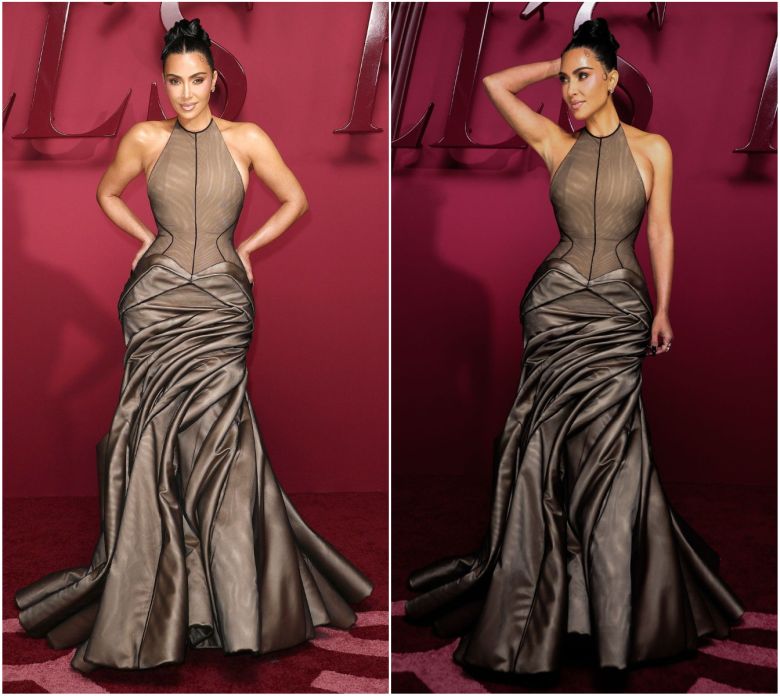
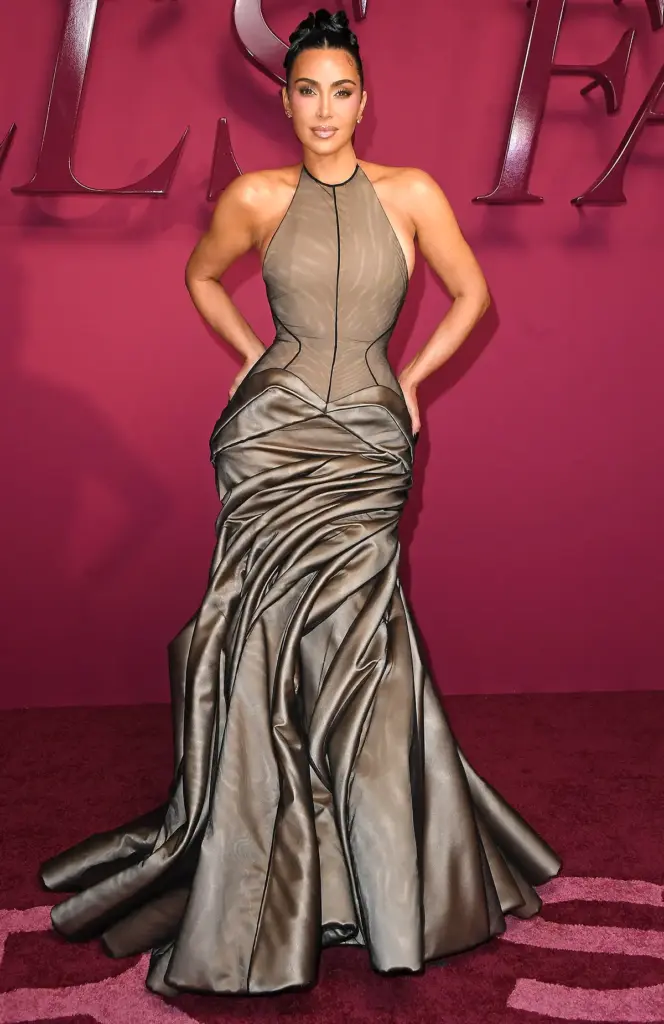
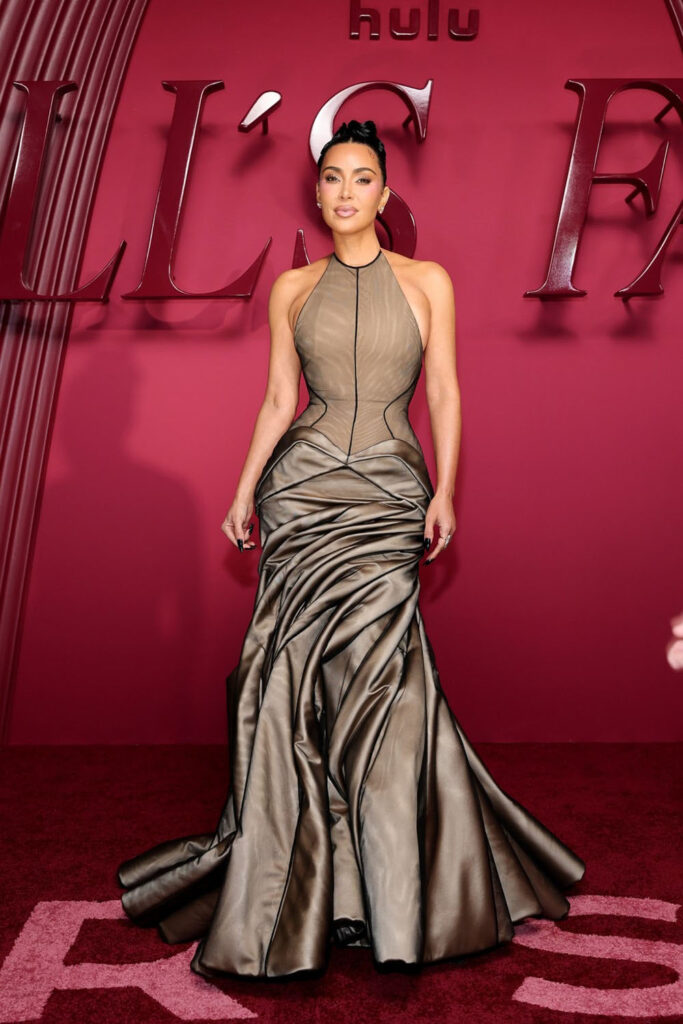
Kim spoke about the release during a red-carpet interview at the premiere of her new show All’s Fair and admitted she was “shocked” by how much attention the piece received. She explained it started out as “a fun, silly idea” during a photo shoot. “We’ve been laughing and talking about it all day long,” she told the reporter.
Behind the scenes she asked her team: “Is it too weird?” A stylist answered: “Weird sells. Let’s lean into it.” The candid exchange shows how intentional the launch was. What seemed like taboo-bending underwear really functioned as a marketing moment and cultural statement.
The product itself features fake hair arranged to mimic body hair and is billed as “Your carpet can be whatever color you want it to be,” according to SKIMS’ Instagram announcement. The bold slogan sat side-by-side with a video ad parodying a 1970s game show, adding humour and absurdity to the mix.
Reactions were immediate and divided. Some praised Kim for daring to talk bodies, beauty, and grooming habits in a fun way. Others questioned the message and the necessity of designing a thong intended to look like pubic hair. One critic wrote: “Is she mocking beauty standards or flipping them?” Meanwhile, former reality star Bethenny Frankel didn’t hold back—she called the product “a marketing idea” and compared it to a infamous candle launched by another celebrity brand.
The controversy also touched on themes of appropriation and body politics. Some queer and feminist commentators argued the faux bush thong commodified cultural symbols of resistance against body-hair-shaming and sold them back to the mainstream. “Stolen valor,” one online piece claimed.
Despite the backlash, the sales spoke loudly. Priced at just $32, the thong sold out in hours. SKIMS even received a light-hearted jab from European Wax Center, which posted, “When it comes to confidence, faux won’t do.” Kim responded with clapping hand emojis.
Fashion analysts noted that while SKIMS has long taught inclusivity with shapewear in every size and shade, this launch felt like a pivot—less about accessibility and more about spectacle. Silence around the underwear hang-tagged as “most daring yet” raised the question: is this empowerment or pageantry? One Instagram comment said it succinctly: “Empowerment wears underwear like that?”
Kim herself acknowledged the absurdity. “I still can’t believe how much this got attention,” she told E! News. “It was just a silly idea.” But the word “just” seemed undercut by sales figures and social-media tsunami.
The launch also fits into a larger SKIMS pattern of polarising stunts—past pieces included a shapewear bra styled like a nipple bra and face-wraps evocative of surgical gear. These products blur the line between fashion, performance and viral marketing.
For some fans it felt daring and fun: Kim pushing boundaries, mocking norms, owning body hair stigma. For others it read as over-the-top: a marketing gambit exploiting intimacy and attention. The real takeaway is that both sides are talking. And that is exactly what the brand hoped for.