
Lily Collins didn’t just make an entrance at Paris Fashion Week on October 3 she set social feeds ablaze when she stepped out in a lace “naked dress” that left fans and critics debating fashion boundaries, empowerment, and whether couture has finally gone too far.
The actress, usually admired for her classic elegance, took a bold detour into provocative chic with an outfit that was part lingerie ethos and part haute couture statement piece, and almost instantly became the look of the moment.

Picture the scene: the cobblestone streets of Paris, cameras clicking, and there she was, Collins in a see-through lace gown that hugged her silhouette with nothing beneath it except a strategically placed black bra and matching undergarment. It was sheer, it was daring, and it was undeniably on brand for a celebrity who has never been afraid to play with style.
Fashion insiders whispered “game-changer” while more traditional observers crossed their arms and muttered “really?” In true Parisian fashion drama, the outfit looked just as comfortable in the city’s crisp air as it did on the red carpet, blurring lines between casual boldness and red-carpet spectacle.
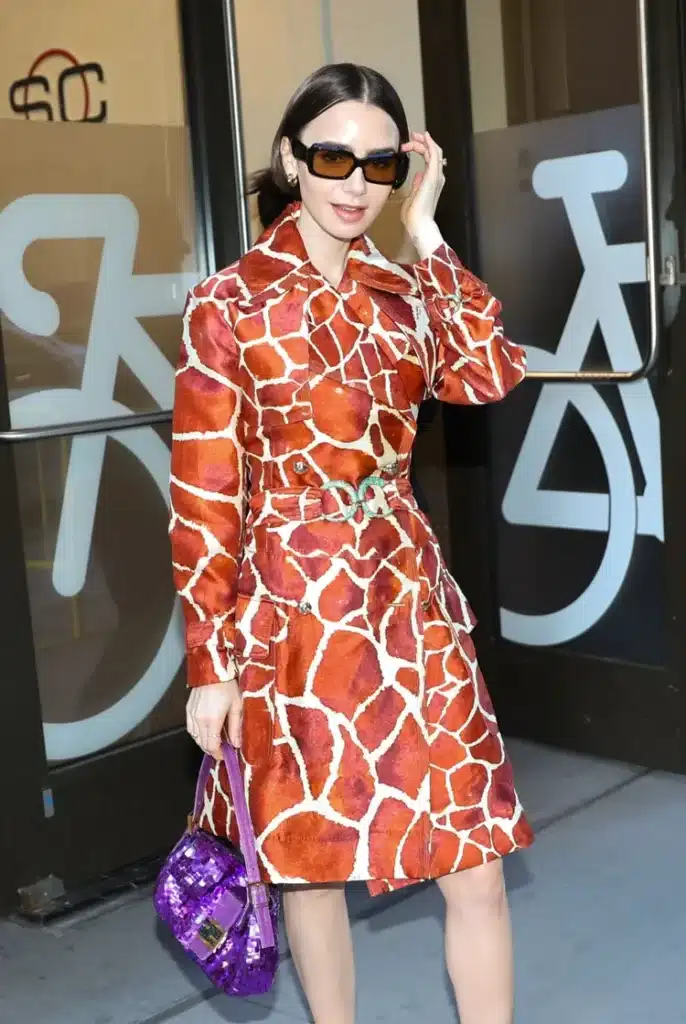
From the moment photos hit social media, comments poured in. Some fans were cheering, posting “Lily just reinvented evening wear,” while others joked “Did she forget her dress?” There was no middle ground. It felt like a high-stakes conversation not just about clothes but about what it means to dress in 2025. Is this empowerment? Performance art? A statement on visibility? Or just shock value with a couture twist? Collin’s choice didn’t come with a clear answer, and that’s exactly what made it so buzzworthy.
In interviews after the show, Collins explained she wanted the look to celebrate confidence and self-expression. She noted that fashion to her is an art form; and sometimes the art is bold enough to stir opinions. Whether walking into a gala or strolling through Paris streets, she said clothing should spark joy and conversation, not just cover skin. That sentiment resonated with many who see fashion as a vehicle for identity.
On live feeds, one commentator summed it up perfectly: “She didn’t wear a dress, she curated an argument.”
But let’s be honest; the controversy wasn’t just about what was on her body, it was about what wasn’t. In a culture where celebrities are often covered, filtered, and perfected before the world sees them, here was an A-list star choosing transparency and boldness in equal measure. Fans of traditional glamour struggled with the idea, some claiming that seeing an outfit so revealing on a major runway event was too much too soon. Others argued it was a natural evolution of fashion in an age where minimalism and maximal visibility collide every season.

Designers weighed in too. A few praised the look as avant-garde ingenuity, highlighting how the lace pattern played with shadows and light, making the body almost like a living canvas. Others joked in style lounges that if Collins walked onto their shoot wearing that dress, they’d gladly let her steal the scene.
Conversations in fashion circles centered less on tastelessness and more on intent. Was this a pure fashion moment, or a subtle commentary on the industry’s obsession with exposure?
Critics, however, weren’t shy. Some commentators tweeted “fashion elitism taken too far” while others pinned comparisons to historic moments of risk; from Marie Antoinette’s frilled gowns to the sheer slip dresses of the early 2000s. Every generation has its boundary-pushing outfits, and Lily’s lace ensemble quickly found its place in that archival debate. Whatever side you landed on, it was hard to deny the dress got people talking.
Then there was the fan reaction; memes galore, from “Lily solves global warming by wearing less” to fashion polls asking whether this was empowerment or exhibitionism. The general public chimed in, some defending her confidence and calling the look a celebration of the human form, others insisting that placing the bra front and center under a sheer gown was a publicity tactic disguised as art.

The dialogue spilled over into beauty forums, runway reviews, and even late-night talk shows. Some hosts chuckled, admitting they wished they had the guts to pull off such a look in their youth.
Even within her own fan base the reactions varied. A comment thread on her Instagram post read “Lily is rewriting the rules of glamour” right next to “I miss the Lily who wore classic gowns.” Which begs the question: does evolution in style require controversy? And more importantly, does controversy matter if the individual wearing the clothes feels empowered and in control?
Fashion historians weighed in too, suggesting that revealing outfits have always been part of cultural shifts.
From flapper dresses to crop tops to sheer fabrics that flirt with visibility, clothes have long mirrored society’s relationship with exposure and identity. In that lens, Lily’s lace “naked dress” was simply another chapter in a story where clothes are symbols, not just coverings.
By the time the night ended, the lace dress had already sparked trend forecasts for the coming year. Designers began tweeting lace and mesh combinations, stylists started proposing bra-as-outerwear concepts for upcoming shows, and beauty editors were scrambling to define the next Lily Moment. Whether one calls it empowerment, fashion brilliance, or spectacle, Collins’ decision to wear a lace gown with nothing beneath but a bra wasn’t just a style choice; it was a cultural flashpoint, and in 2025, that’s exactly the sort of moment the fashion world lives for.