
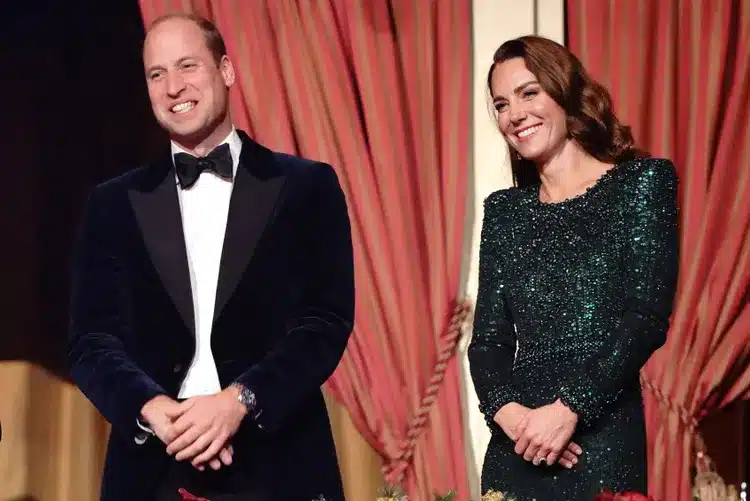
In an understated moment at the recent Royal Variety Performance, Kate Middleton and Prince William slipped in what may be one of the most significant yet stealthy changes to their royal image in years.
The pair returned to the public stage after a two-year absence from this event and inside the glossy programme they unveiled a redesigned family emblem.
That redesign marks a shift in symbolism and intention—and it feels like an elegant bit of controversy cloaked in refinement.
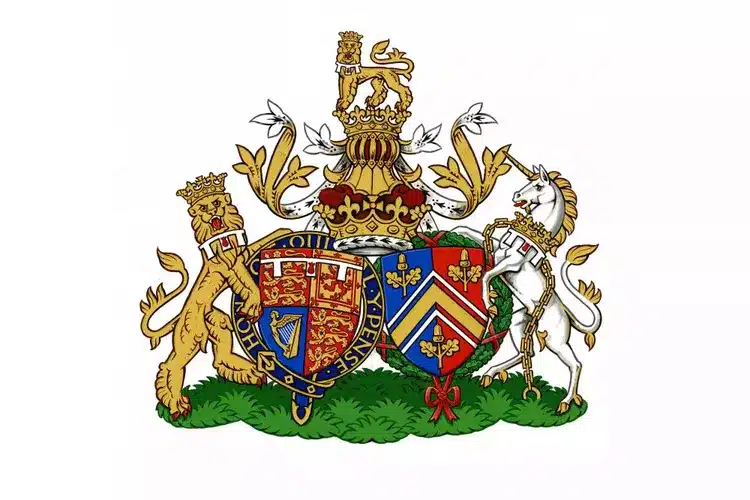
A new version of their Conjugal Coat of Arms appeared in the event booklet. The updated shield includes the familiar Prince of Wales feathers, new crowns that reflect William’s elevated status since inheriting the title, and the motto “Ich Dien” meaning “I serve”.
Meanwhile Kate’s shield continues to honour her Middleton heritage with three sprigs of oak symbolising her and her siblings. The change is subtle—but profound. It is the first redesign since 2013 and in this context it reads like an unspoken declaration about what this couple intends next.
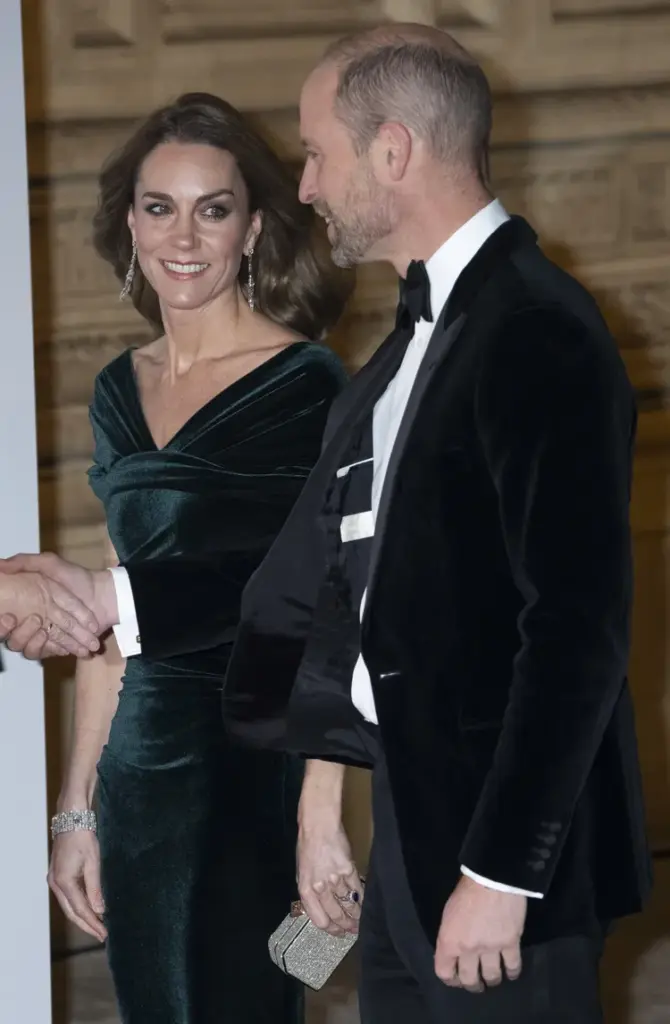
The attire Kate chose for the evening reinforced the message. She wore an emerald velvet off-the-shoulder gown paired with the historic Cartier Greville Chandelier Earrings that once belonged to Queen Elizabeth II. The jewelry carried legacy, the gown carried presence. When she stood beside William under the lights, they looked poised, aligned—and not simply adhering to royal tradition. They looked as though they were daring the tradition to keep up with them.
William’s posture and expression suggested more than just a courtesy visit. His role is shifting. With the new arms the message becomes clear: He is not just heir. He is architect of the next chapter.
The symbolism will not be lost on observers. Some will call it a quiet power move. Others will say it is subtle brand-refinement. Either way it will fuel conversation about where the monarchy is heading and how this couple intends to lead.
What makes this moment all the more intriguing is the way it was executed. No headline-grabbing press conference. No major announcement. The change was tucked inside a programme, at an event some might view as entertainment rather than state. It was done quietly—and that alone gives it punch. In a world where spectacle is predictable, this looked like a deliberate pivot toward control and message mastery.
This update invites speculation on what comes next. Are we witnessing an era of repositioning for the royal family’s next generation? Are William and Kate preparing the ground for a reign that looks less ceremonial and more modern? Their actions say yes without saying much at all. The revision of their emblem becomes a symbol of this potential shift. It raises eyebrows because it challenges expectation while still conforming to protocol.
The public reaction has already begun. Fashion and royal watchers pointed out the redesign in real time. Social media lit up with detail-spotting—some fans applauded the nod to Kate’s family lineage, others questioned whether the accent on tradition undermines the feeling of forward momentum.
A few critics argued that this minor visual change is dressed up as major while deeper institutional reform remains untouched. Yet regardless of opinions, the couple achieved something critical—they grabbed the narrative.
For Kate the oak sprigs are more than motifs. They tie her directly to her roots and subtly reinforce her status as more than a consort—they hint at an equal partner in the enterprise of monarchy.
For William the crowns and motto make his role loud in silence. The combination signals that balance between continuity and change is being managed precisely. This matters because the monarchy relies on image as much as it does on institution. They managed to update one without the noise.
It is also worth noting the timing. The event came at a moment when global attention on royalty is both intense and fickle. Amid skyrocketing digital coverage and tightening budgetary scrutiny, a quiet update feels like a smart move. They did not demand headlines. They made the headline. And they did it in the kind of style that feels effortless yet intentional.
In the broader arc of their public life this moment stands out. We know William and Kate have recently focused on wellness, family, mental health and generational issues. Now they are signalling that they are also steering legacy.
They are putting a stake in the ground. Their approach suggests confidence rather than caution. That in itself is controversial when you consider how often royals are expected to be cautious rather than bold.