
Belts are often the most underrated accessory in fashion, but they can make a huge difference in your outfit. A well-chosen belt can enhance your silhouette, bring structure to a loose outfit, or add that perfect finishing touch to your look.
I’ve learned over the years that the width of your belt plays a key role in how it complements the rest of your outfit.
Whether you’re dressing for a formal event, heading to work, or simply getting ready for a day out, choosing the right belt width can completely transform your outfit.
1. Belt Width
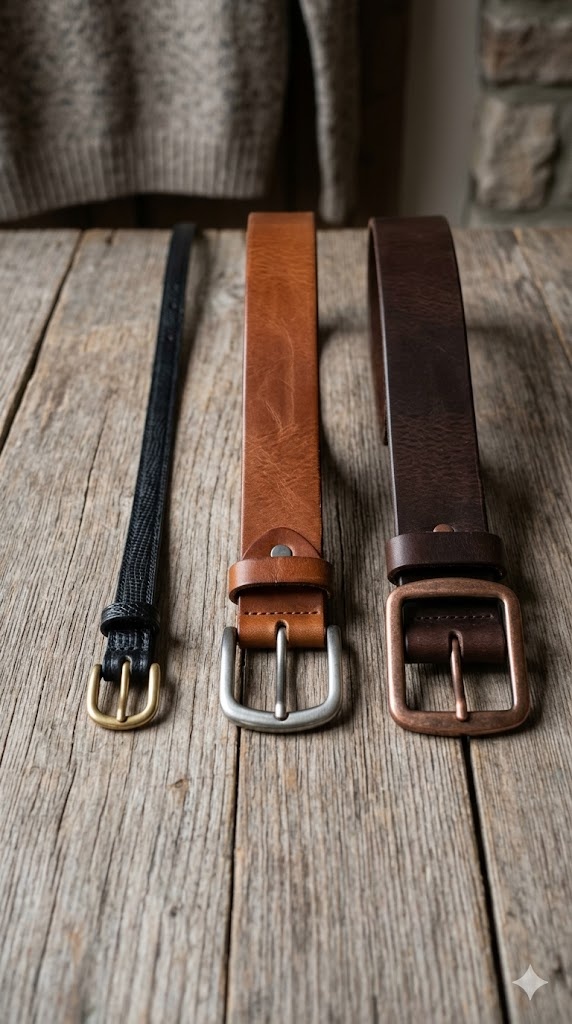
When I first started experimenting with belts, I didn’t realize how much the width could change the entire look of my outfit.
Now, I always consider the width of my belt before I even pick out my outfit.
Here’s how I break it down:
Thin Belts (0-2 cm)
Thin belts are my go-to when I want to create a more elegant or delicate look. They’re perfect for dressing up a formal outfit or adding a subtle detail to dresses and skirts.
Thin belts are excellent for drawing attention to your waist without overpowering your outfit.
Personally, I love pairing them with a flowy dress or under a blazer to create a structured yet light silhouette.
I remember wearing a thin belt with a simple black dress for a cocktail party once. It added just the right touch of sophistication while still keeping the overall look minimal.
When it comes to thin belts, I stick to neutral colors like black or brown, which are versatile and timeless.
Tip: If you’re wearing a thin belt, make sure the belt doesn’t compete with your outfit’s focal point.
Thin belts are best when they add a bit of structure or highlight your waist without stealing the spotlight.
Medium Belts (3-4 cm)
Medium-width belts are my everyday go-to. They offer a perfect balance between elegance and practicality. Whether I’m dressing casually for a day at work or aiming for a smart casual look, medium-width belts always seem to hit the sweet spot.
These belts are great for jeans and knitwear or when I want to define my waist without feeling too structured.
I’ve often paired a medium belt with a pair of high-waisted trousers or a simple button-down shirt. It’s an easy, polished look that doesn’t take too much effort.
Medium belts are perfect for that smart casual vibe, as they add just the right amount of detail to any outfit.
They also work well with trench coats or structured dresses.
Tip: If you’re unsure which belt to go for, medium-width belts are the most versatile and can be paired with almost anything.
I recommend keeping a few in your wardrobe in neutral shades like black or tan for easy styling.
Wide Belts (5 cm+)
Wide belts are a statement piece for me. Whenever I want to add dramatic flair to my outfit, I’ll reach for a wide belt. They’re bold, they create strong visual lines, and they’re perfect for oversized dresses or coats.
I remember wearing a wide belt over a loose-fitting dress for a brunch, and the transformation was immediate.
The belt pulled everything together, creating a flattering hourglass shape and giving the outfit structure.
Wide belts are also a great way to elongate your legs, especially if you’re petite like me.
Pairing a wide belt with a dress that hits just above the knee gives the illusion of longer legs, and it helps bring attention to your waist in a flattering way.
Tip: If you’re petite or have a smaller frame, wide belts work wonders when worn at the high waist.
This positioning helps elongate your legs and creates an elegant proportion.
2. Belt Width by Outfit
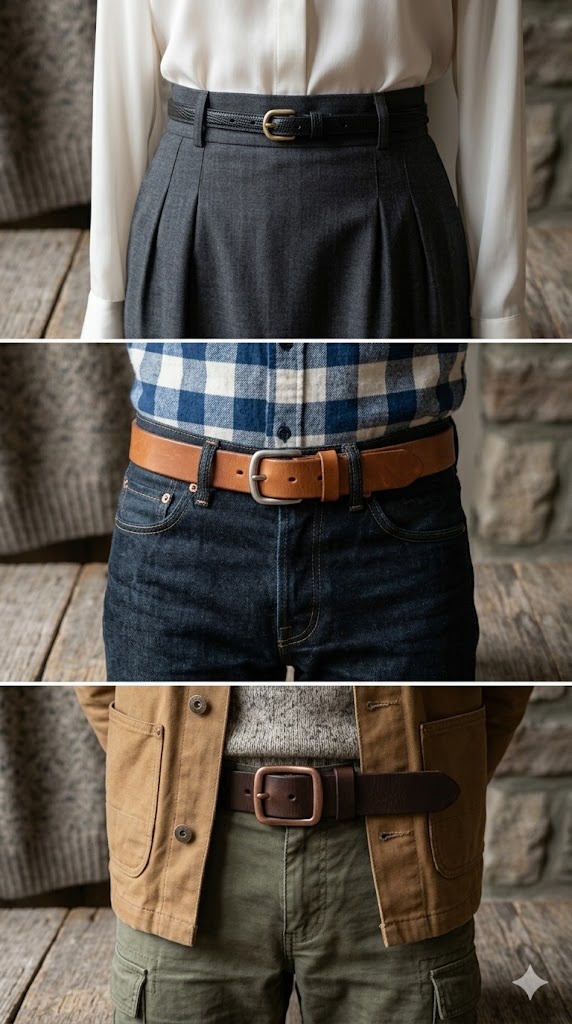
Not all outfits are created equal, so it’s important to match your belt width with your clothing.
Over the years, I’ve learned that the right belt can completely change the vibe of an outfit.
Let’s break it down:
Thin Belt for Dresses & Skirts
I often wear thin belts when I want to add a little definition to my dress or skirt without interrupting the flowy feel.
This works especially well with dresses that have a loose fit or are waistless.
Thin belts cinch the waist and create shape, without taking away from the overall design of the dress.
For example, I wore a floral dress to a wedding recently and paired it with a thin tan belt.
It brought the whole outfit together without competing with the bold print, and I felt comfortable and elegant all day.
Medium Belt for Smart Casual Outfits
Medium-width belts are my favorite when I’m dressing for a smart-casual occasion. Think work meetings, casual lunches, or dinner dates.
A medium belt works perfectly with trousers, skirts, and even casual dresses. It provides just the right amount of structure, defining the waist without feeling too formal.
One of my favorite combinations is a medium-width belt with a blouse and high-waisted jeans.
It’s simple, stylish, and perfect for almost any occasion.
Wide Belt for Statement Looks
Wide belts are fantastic when you want to make a statement. They work beautifully with oversized dresses or coats.
I’ve worn a wide belt with a trench coat before, and it immediately gave the outfit a chic, structured feel.
Wide belts are perfect for creating that hourglass figure and giving a bold, dramatic effect.
If you’re going for a bold look, I’d definitely recommend experimenting with wide belts.
They can add an unexpected twist to more traditional outfits, and they’re perfect for making a statement.
3. Waist Point
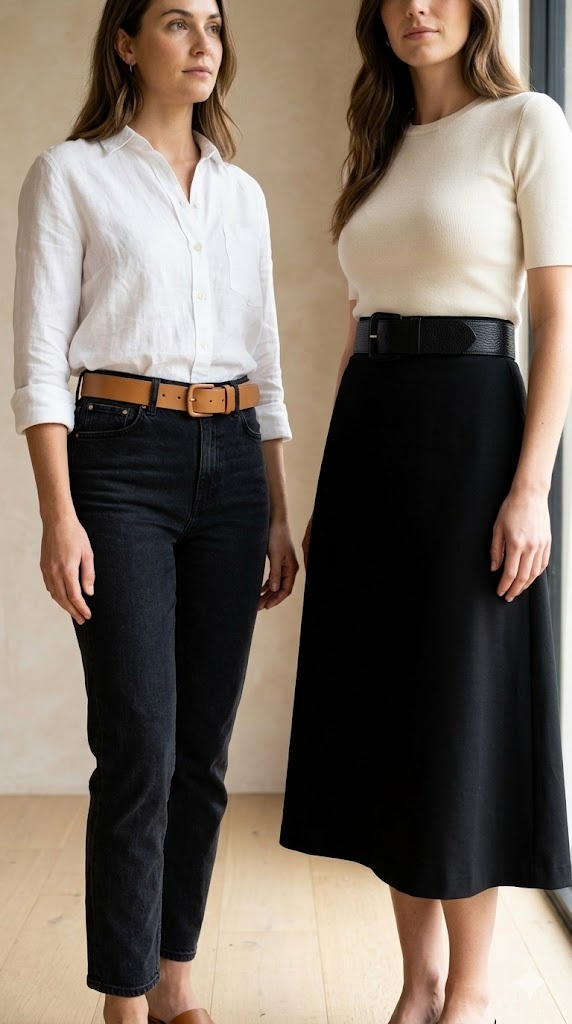
Now, this is a crucial aspect of wearing belts: where to position them on your waist. The placement of your belt can make all the difference in how flattering it looks.
Natural Waist
For a more traditional and flattering look, I like wearing belts around my natural waist. This is where your body naturally curves, and it’s where most people look their slimmest.
Thin, medium, or wide belts can all be worn at the natural waist, depending on the look you want to achieve.
When I wear belts at my natural waist, I tend to pair them with dresses or skirts that are slightly high-waisted.
The result is a more defined, feminine silhouette. It’s the classic way to wear a belt for a polished, timeless look.
High Hip
Wearing a belt on the high hip can elongate your legs and create a more elongated, modern look.
Wide belts, in particular, work great here, as they create a strong visual line.
If you’re wearing a long dress or maxi skirt, a belt at the high hip can make your legs look longer and your overall outfit more structured.
I’ve found that wide belts at the high hip are perfect when I’m wearing oversized dresses or tunics.
They help break up the bulkiness and give a more defined look without compromising comfort.
Choosing the Right Belt
Choosing the right belt width is all about knowing your style and understanding how different belts enhance your body shape and outfit.
Whether you’re dressing up for a special occasion or keeping it casual, the right belt can be the perfect finishing touch.
Thin belts for elegant outfits, medium belts for versatile wear, and wide belts for bold, statement looks; each one offers its own set of benefits.
Remember, a belt is not just a practical accessory; it’s a tool that can enhance your look, define your waist, and add personality to any outfit.
So next time you’re getting ready, don’t forget the power of the perfect belt.
I promise you, it’s worth it!